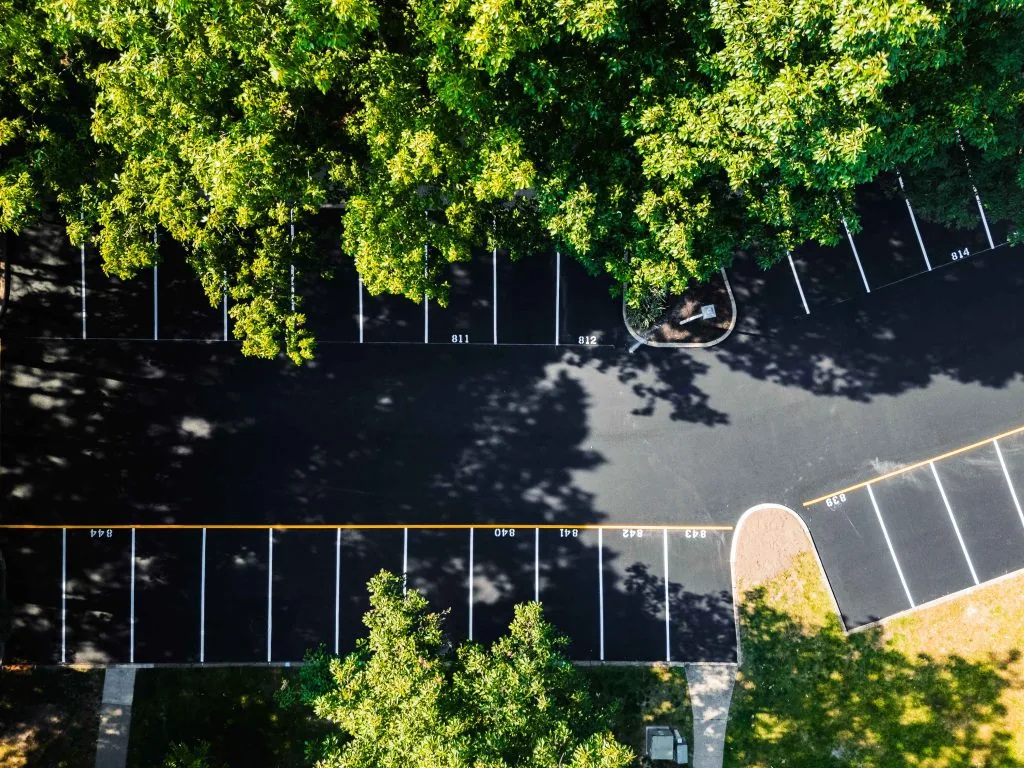
A parking lot is one of the first parts of a commercial property that customers, tenants, employees, and visitors experience.
Cracks, potholes, standing water, and uneven pavement can affect appearance, access, and everyday use.
Professional commercial parking lot paving in Austin can help restore the surface and create a cleaner, safer, and more organized entrance to the property.
Why Parking-Lot Condition Matters
A commercial parking area handles regular vehicle traffic, weather exposure, delivery trucks, and ongoing wear.
Over time, the surface may begin to deteriorate.
A damaged parking lot can create:
- Rough driving conditions
- Trip hazards
- Poor drainage
- Unclear parking spaces
- Reduced curb appeal
- Difficult access
- Vehicle damage concerns
- Additional maintenance costs
Routine inspections can help property owners identify problems before they spread.
1. Widespread Cracking
Small cracks may develop as pavement ages.
However, cracks should not be ignored. Water can enter the surface and affect the materials underneath.
Common crack patterns include:
- Long linear cracks
- Edge cracks
- Block cracking
- Alligator cracking
- Cracks near drains
- Cracks around repaired areas
A few isolated cracks may be repairable. Widespread cracking may indicate that the surface or base needs more extensive work.
2. Recurring Potholes
Potholes can form when water enters damaged pavement and weakens the materials below.
Traffic then places additional pressure on the affected area.
One pothole may be repaired. However, potholes that repeatedly return can indicate a larger issue with drainage, pavement thickness, or the underlying base.
Frequent patching may eventually become less practical than resurfacing or repaving.
3. Standing Water
Water should move away from parking spaces and driving lanes.
If puddles remain after rainfall, the property may have:
- Low areas
- Insufficient slope
- Blocked drains
- Damaged pavement
- Settlement
- Poor grading
- Inadequate drainage capacity
Standing water can accelerate surface deterioration and make the parking area more difficult to use.
Drainage should be evaluated before new pavement is installed.
4. Uneven or Sunken Areas
Heavy traffic, soil movement, water, or an unstable base can cause sections of pavement to sink.
Uneven surfaces may appear near:
- Drainage structures
- Loading areas
- Dumpster pads
- Driveway entrances
- Utility repairs
- Building entrances
- High-traffic lanes
Adding new material over an unstable area may not provide a lasting solution. The underlying condition should be corrected first.
5. Faded Striping
Parking lines, directional arrows, loading zones, fire lanes, and accessible spaces help organize traffic.
Faded markings can make the property look neglected and create confusion.
Restriping may be enough when the pavement remains in good condition.
However, if the surface is cracked or deteriorated, repairs or resurfacing should generally be completed before new markings are applied.
6. Damaged Curbs and Sidewalk Connections
The parking lot should work together with curbs, sidewalks, ramps, and entrances.
Cracked or uneven transitions may affect pedestrian access and drainage.
Related improvements may include:
- Curb repair
- Sidewalk replacement
- Ramp improvements
- Drainage corrections
- Concrete aprons
- Loading-area repairs
- Wheel stops
Coordinating these features can provide a more complete improvement.
7. Poor First Impression
Visitors may notice the parking lot before they see the building.
A clean, well-marked surface can make the entire property feel better maintained.
Repaving may improve:
- Curb appeal
- Tenant satisfaction
- Customer experience
- Traffic organization
- Property presentation
- Lease-up appearance
The pavement should complement other exterior improvements such as landscaping, painting, lighting, and signage.
Repair, Resurface, or Repave?
The appropriate solution depends on the extent of the damage.
Repairs
Localized repairs may be suitable for:
- Small potholes
- Limited cracking
- Damaged utility cuts
- Isolated settlement
- Minor edge damage
Resurfacing
Resurfacing adds a new layer over an existing pavement structure.
It may be appropriate when the surface is worn but the base remains stable.
Full Repaving
Complete replacement may be needed when:
- Damage is widespread
- The base has failed
- Drainage is inadequate
- Several repairs have already failed
- Large areas have settled
- The pavement is severely deteriorated
A site evaluation can determine which approach is most practical.
Asphalt vs. Concrete
Commercial parking lots may use asphalt, concrete, or a combination of both.
Asphalt
Asphalt is commonly used for large parking areas and driving lanes.
It can provide a smooth surface and may be repaired or resurfaced in sections.
Concrete
Concrete is often used for:
- Loading areas
- Dumpster pads
- Entrances
- Curbs
- Sidewalks
- Heavy-use sections
The material selection should consider traffic, drainage, maintenance, budget, and the type of vehicles using the property.
Plan Around Business Operations
Commercial paving work should be scheduled to reduce disruption.
The project plan may include:
- Phased construction
- Temporary entrances
- Traffic control
- Tenant communication
- Delivery coordination
- Weekend work
- Temporary parking areas
- Clear project signage
A phased plan can help keep parts of the property accessible during construction.
Questions to Ask a Paving Contractor
Before approving the project, ask:
- What is causing the pavement damage?
- Does the base need repair?
- Are drainage improvements required?
- Should the lot be repaired, resurfaced, or replaced?
- What materials are recommended?
- How will traffic be managed?
- How long must the surface cure?
- Is striping included?
- Will curbs and sidewalks be addressed?
- How should the new surface be maintained?
- What warranty is included?
The proposal should clearly explain the recommended work.
Professional Commercial Parking Lot Paving in Austin
A well-maintained parking area supports access, safety, organization, and the overall appearance of a commercial property.
Together Exterior & Outdoor Remodeling provides commercial parking lot paving in Austin. Our team can coordinate asphalt, concrete, curbs, drainage, walkways, exterior lighting, landscaping, and other commercial improvements.
Contact Together Exterior & Outdoor Remodeling to schedule a commercial property evaluation.