A healthy landscape needs more than attractive plants and fresh grass. It also needs a reliable watering plan.
Professionally designed irrigation systems in Austin can help deliver the right amount of water to different areas of your yard. As a result, your landscape can stay healthier without requiring constant manual watering.
A modern irrigation system can also make outdoor maintenance more convenient. More importantly, it can help reduce overwatering and direct water where it is needed most.
Why Irrigation Systems in Austin Matter
Austin landscapes face intense sunlight, high temperatures, and periods of limited rainfall. However, every lawn and garden has different watering needs.
Grass may require a different schedule than trees, shrubs, or flower beds. Therefore, watering the entire property in the same way may not produce the best results.
A properly planned irrigation system separates the landscape into zones. Each zone can then receive a more appropriate amount of water.
1. More Consistent Watering
Manual watering can be difficult to manage. Some sections may receive too much water, while other areas remain dry.
An automatic irrigation system provides a more consistent schedule. It can distribute water throughout the landscape without requiring you to move hoses or sprinklers around the property.
Consistent watering can support:
- Healthier grass
- Stronger plants and shrubs
- More balanced soil moisture
- Fewer dry or uneven patches
- Better-looking outdoor spaces
In addition, automatic scheduling makes it easier to water during approved hours.
2. Improved Water Efficiency
A well-designed irrigation system should not simply spray water across the entire yard. Instead, it should deliver water based on the needs of each area.
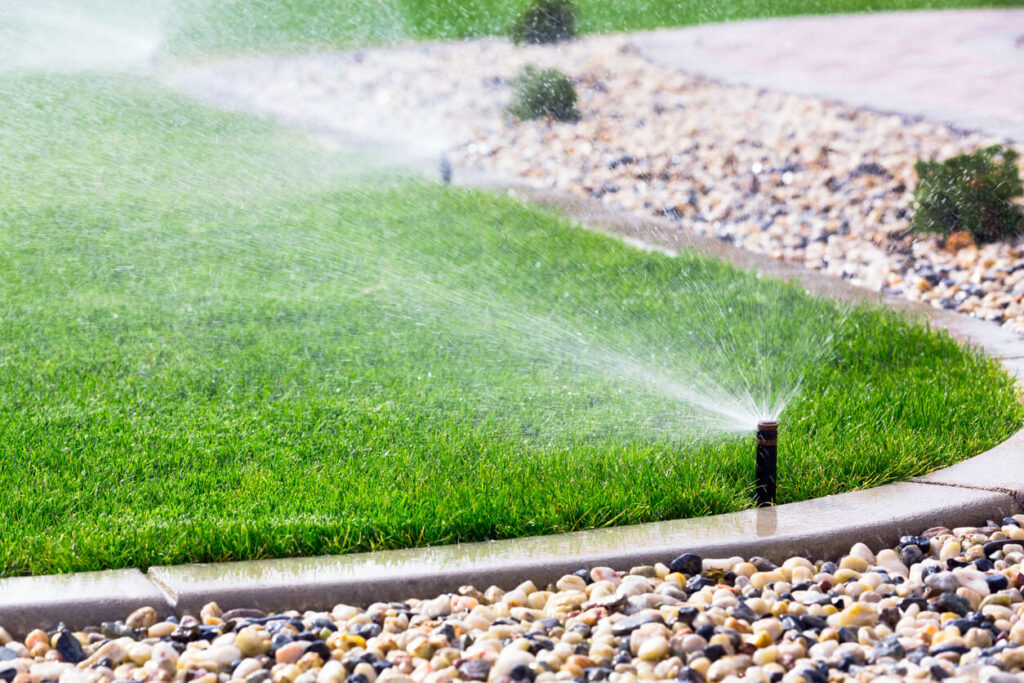
For example, drip irrigation can deliver water closer to the roots of plants. Meanwhile, properly positioned sprinkler heads can provide more even coverage across lawn areas.
The system should also be checked for leaks, damaged heads, blocked nozzles, and overspray. These common problems can waste water and leave parts of the landscape without enough moisture.
3. Smarter Irrigation Controls
Traditional irrigation controllers follow a fixed schedule. However, a smart controller can adjust the schedule based on current conditions.
Some smart irrigation controllers use local weather information. Others use soil moisture sensors to determine whether the ground needs additional water.
As a result, the system may avoid watering during rainy periods or when the soil already contains enough moisture.
Smart controls can provide:
- Easier scheduling
- Seasonal adjustments
- Reduced unnecessary watering
- Better control over individual zones
- Remote access through compatible applications
Homeowners should still review the current local watering schedule before programming any irrigation system.
4. Protection for Your Landscaping Investment
New landscaping can be a significant investment. Plants, trees, grass, mulch, and decorative features all contribute to the appearance of your property.
However, inconsistent watering can place stress on plants and lead to dry areas. Too much water can also create problems, including oversaturated soil and standing water.
A properly designed system helps create a better balance. Therefore, it can support the long-term health of your landscaping.
5. Easier Outdoor Maintenance
Watering a large property by hand takes time. It may also become difficult when you are traveling, working, or managing several outdoor areas.
An automatic system reduces the amount of daily attention your landscape requires. Once the system is programmed correctly, it can handle much of the routine watering.
However, irrigation systems still require occasional inspections. Seasonal adjustments and regular maintenance help keep the system working efficiently.
Signs Your Irrigation System Needs Attention
An existing system may need repairs or improvements if you notice:
- Dry or brown sections of grass
- Water spraying onto driveways or sidewalks
- Broken or tilted sprinkler heads
- Water collecting in low areas
- Unusually high water use
- Weak water pressure
- Zones that do not turn on
- Water running from damaged valves
- Different areas receiving uneven coverage
Addressing these issues early can help prevent water waste and landscape damage.
Irrigation Should Work with the Entire Landscape
Irrigation is only one part of an effective outdoor plan.
The system should work together with the property’s grading, drainage, soil conditions, plant selection, and hardscape layout. For example, sprinkler heads should not continuously spray patios, walls, fences, or walkways.
Likewise, water should not collect near the home’s foundation or outdoor structures.
Planning these elements together can create a landscape that is easier to maintain and better prepared for changing weather conditions.
Professional Irrigation Solutions in Austin
Every property has different watering requirements. The ideal system depends on the size of the yard, the type of landscaping, sun exposure, soil conditions, and available water pressure.
At Together Exterior & Outdoor Remodeling, we provide professional irrigation solutions for Austin-area properties. Our team can help with irrigation installation, repairs, system improvements, landscaping, drainage, and complete outdoor remodeling.
We focus on creating outdoor spaces that are beautiful, functional, and easier to maintain.
Contact Together Exterior & Outdoor Remodeling to schedule an outdoor consultation.